Beyond Work: How AI and Robotics Could Reshape the Future Economy
4-minute read
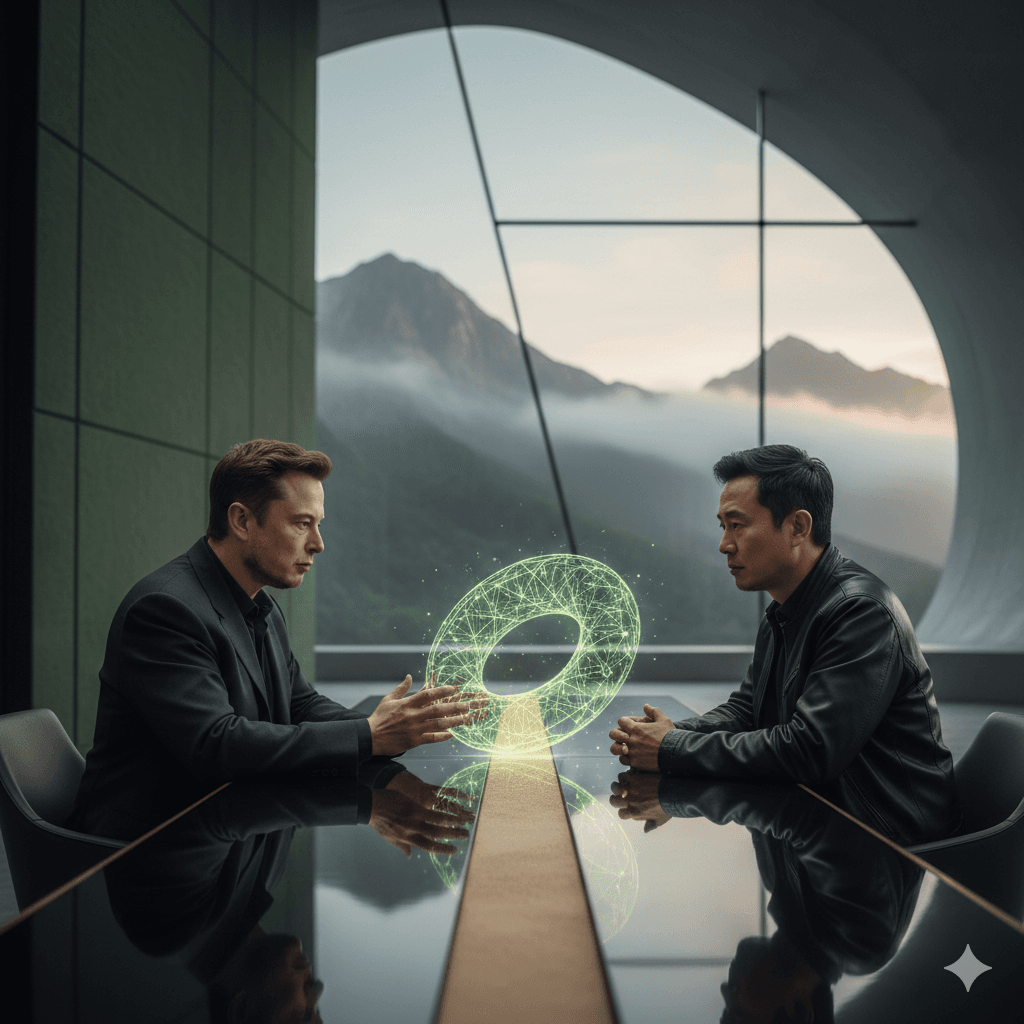
It's not work or technology: it's a future where work could become optional
Estimated reading time: 8 minutes

Contents
Key takeaways
- AI is shifting computing from retrieving information toward generating intelligence in real time.
- Combining artificial intelligence with robotics raises the possibility of dramatically reducing poverty.
- Work could become a choice rather than an obligation.
- Technology can free us to pursue purpose instead of replacing it.
The core idea, explained simply
For years, we've been given a false choice: work harder or be replaced by technology. Economic progress or personal freedom. Efficiency or meaning.
But what if the future didn't force us to choose between extremes? What if there were a third way, where technology gave us more room to be human instead of less?
Imagine explaining this to a ten-year-old.
Until recently, computers mostly helped us find information that already existed. Today, AI can generate new responses and solutions in real time, shaped by what someone asks for and needs.
Jensen Huang, CEO of NVIDIA, describes this as a transition from computing that retrieves information to computing that generates intelligence in real time. He speaks of “AI factories”: infrastructure that produces new insights, solutions, and knowledge, much as earlier industries produced steel or energy.
Elon Musk proposes an even more disruptive vision:
- Truly useful, general-purpose humanoid robots are still developing, but he expects them to become widespread.
- When they mature, he predicts people will want one—or several.
- Combining AI and robotics could, in his view, help eliminate poverty.
In the long run, work could become optional.
Not because there would be nothing meaningful to do, but because technology might meet basic needs and allow people to approach work as a choice—something closer to a hobby or sport.
These are ambitious predictions, not outcomes that have already been demonstrated.
The sovereignty connection: technology that expands freedom, not just productivity
Businesses and systems designed for freedom
What Musk and Huang describe goes beyond technical progress. It suggests a change in how our systems operate:
- Economic activity shifts from an emphasis on traditional resources toward intelligence.
- Businesses can become less dependent on labor-intensive execution and more focused on augmented creativity.
- Value shifts from “working more hours” to thinking and designing better.
Huang offers an example from radiology:
- Some predicted AI would eliminate radiologists' jobs.
- Instead, he points to continued hiring and demand for radiologists.
- AI can help them examine more cases, spend more time with patients, and improve diagnostic work.
In that telling, AI didn't eliminate the purpose of the work. It reduced some of its mechanical burden.
The same principle can apply to digital businesses, nomadic work, and online ecosystems. When reliable systems take care of repetitive tasks, you regain control of your energy.
Reflection: the third way
When I hear Musk say that work will be optional, I don't read it as just science fiction. I read it as an invitation to reconsider what life could be.
The deepest change isn't only technological. It's personal.
If work were optional tomorrow, perhaps the question wouldn't be:
How do I make money?
It would be:
Who do I choose to become when I'm no longer focused on survival?
That brings me back to ideas I've explored for years while traveling, creating, and simplifying:
- Work becomes optional, but the desire to create remains.
- Energy sovereignty: Refusing to let systems you didn't choose drain your life.
- Minimalism: Less noise, more intention.
- Nomadic evolution: Using movement as a way to grow and expand your perspective.
Technology used well shouldn't trap you behind a screen. It should give you back time, presence, and choice.
That's the third way: abundance plus freedom, without sacrificing meaning for efficiency.
A question that opens new possibilities
If AI and robotics could handle the hardest work—and earning a living were no longer an obligation—
What kind of world would you create if your energy were no longer consumed by survival?
Plan the next step for your business
In a free, 45-minute one-on-one video call, we’ll review where you are and identify where to start.
Frequently asked questions
Does that mean AI won't replace any jobs? Not necessarily. AI will transform roles and may displace some jobs, while shifting other work toward judgment, creativity, and human relationships.
Does optional work mean doing nothing? No. It means having the freedom to work from desire and purpose rather than necessity.
Would this future be available only to wealthy countries? The vision is that AI and robotics could help spread abundance globally. Whether that happens depends on access, institutions, economics, and policy.
Credits
Original YouTube video: Elon Musk & Jensen Huang — AI, Robotics, Work & the Future of Humanity. Watch on YouTube


